
A Journey to the Heart of Mesopotamia
Some places you visit, and some places you feel. The National Museum of Iraq, in Baghdad, belongs to the latter category. Entering its galleries is not simply walking past ancient display cases: it is walking in the footsteps of early humanity, contemplating the birth of writing, of cities, of laws, and of the great civilisations that changed the world forever.
For anyone interested in history, archaeology, or authentic travel to Iraq, this museum is an absolute must-see. Its halls house some of the greatest treasures of Mesopotamia ever discovered, unique pieces that summarise thousands of years of human history within a single building.
When I returned to the National Museum of Iraq in 2024, after many years living between my two cultures – Spanish and Arabic – I understood something very quickly: a few hours are not enough. The museum deserves an entire day. Each room invites you to linger. Each object tells a story, and at many moments you have the feeling of being face-to-face with the very origin of our civilisation.
The History of the National Museum of Iraq
The National Museum of Iraq was officially founded in 1923 thanks to the efforts of British archaeologist Gertrude Bell, one of the most influential figures in the creation of modern Iraq and a great advocate for the protection of Mesopotamian heritage.
In its early days, the museum occupied a smaller building in Baghdad, where a rapidly growing archaeological collection began to be assembled thanks to excavations carried out across the country. Iraq was —and remains— one of the most important archaeological territories in the world, and each new expedition unearthed extraordinary artefacts from the ancient Mesopotamian civilisations.
As the years passed, the constant growth of the collection necessitated a much larger and better-equipped headquarters to house thousands of historical artefacts. Finally, the museum was relocated to a larger, more modern building in Baghdad, specifically designed to preserve and display one of humanity's most valuable archaeological heritages.
A museum that guards the origins of humanity
Few places in the world can boast of containing pieces that narrate the dawn of human civilisation so comprehensively.
Among its collections are objects from:
- Ur
- Uruk
- Babylon
- Nineveh
- Nimrud
- Hatra
- Assur
- Samarra
- Ctesiphon
- Khorsabad
- Tell Harmal
- Seleucia
Many of these cities were authentic centres of the ancient world.
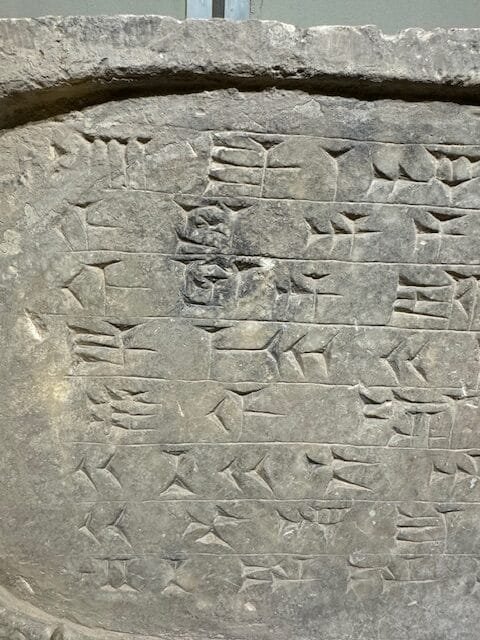
In the museum halls, one can see the earliest forms of cuneiform writing well-known, cylindrical seals used over 5,000 years ago, Assyrian royal sculptures, gold jewellery from the Royal Tombs of Ur, and monumental reliefs that decorated entire palaces.
It's impossible not to feel a historical vertigo when realising that many of the fundamental ideas of our society were born right here:
- writing,
- administration,
- the first laws,
- urban planning,
- astronomy.,
- mathematics,
- and epic literature.
The galleries of the National Museum of Iraq
The National Museum of Iraq houses one of the most important archaeological collections on the planet. The main building covers approximately 45,000 square metres and is organised into numerous galleries and specialised rooms dedicated to the different historical stages of Mesopotamia and Islamic Iraq.
Its galleries span thousands of years of history, from prehistoric times to the Islamic period, encompassing the great Sumerian, Akkadian, Babylonian, and Assyrian civilisations. Each space is designed to transport the visitor to a specific era, allowing for an understanding of the evolution of a land considered the cradle of civilisation.
Among the main galleries of the museum are:
- Prehistoric Hall
- Sumerian Room
- Acadia Hall
- Babylonian Room
- Assyrian sculpture hall
- Hatra Period Hall
- Islamic Halls
- Manuscript and decorative art galleries
- Rooms dedicated to Ur, Nimrud and Nineveh
- Monumental sculpture spaces
- Cuneiform tablet areas and historical archives
Exploring them all requires time, patience, and a great deal of curiosity. It is not a museum to visit in a hurry, but rather to stop constantly in front of pieces that changed the course of human history.
Sumerian Room
The Sumerian room is one of the most impressive in the museum. This is practically where the written history of humankind begins.
The artefacts originate mainly from cities such as Ur, Uruk, and Lagash. Among their outstanding jewels are:
- cuneiform tablets,
- Votive sculptures,
- Cylindrical seals,
- and ritual objects over 5,000 years old.
One of the most impactful moments is observing the earliest known forms of writing. They are small signs etched onto clay that would end up changing human history forever.
Acadia Hall
The Akkadian civilisation unified a large part of Mesopotamia under the reign of Sargon of Akkad.
This gallery features real sculptures, bronze heads and military pieces that show the birth of one of history's first great empires.
The famous bronze head attributed to an Akkadian king is one of the museum's masterpieces.
Babylonian Room
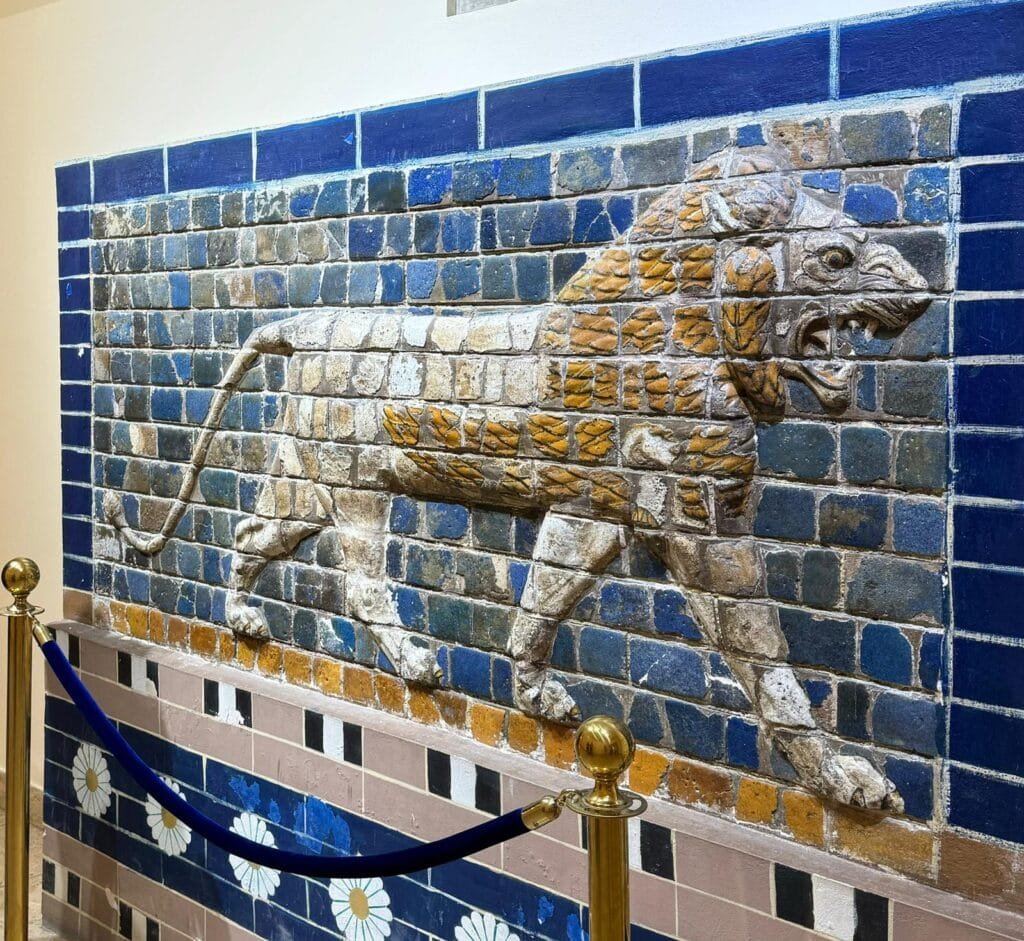
The Babylonian Hall transports you directly to the splendour of Babylon.
In this room can be seen:
- relieves,
- glazed bricks,
- statues,
- Ceremonial objects from the time of Nebuchadnezzar II also stand out.
The artistic details reflect the enormous refinement achieved by Babylon in architecture and decoration.
Many pieces recall the power of a city that became one of the wonders of the ancient world.
Assyrian Room
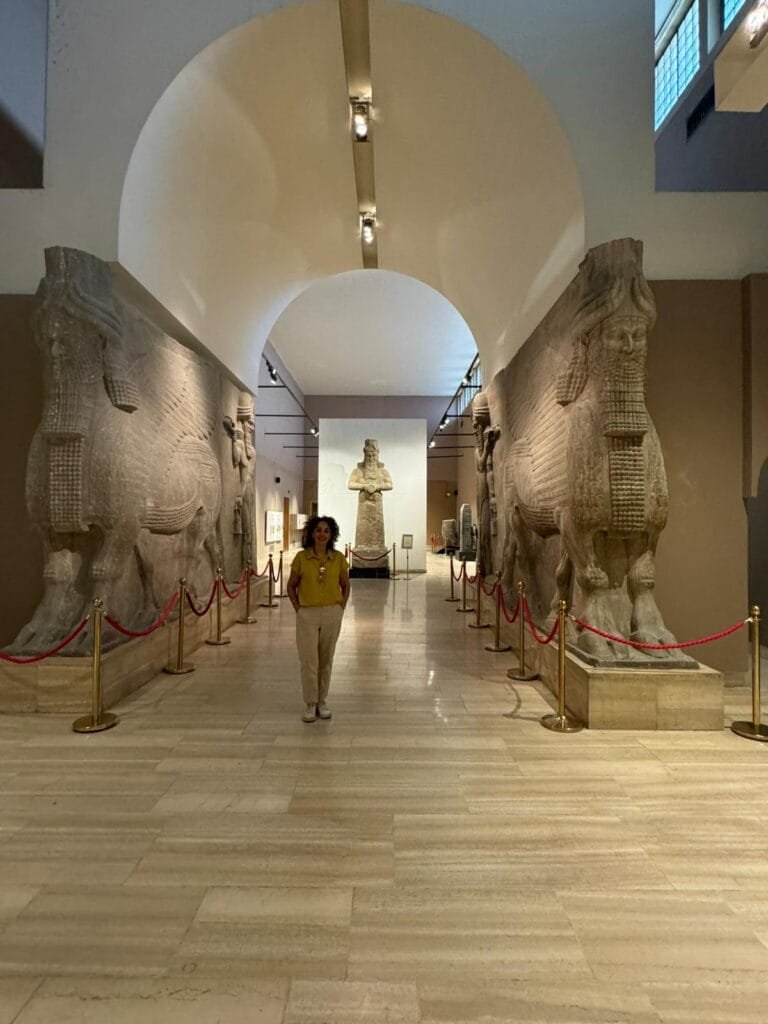
Possibly one of the most spectacular rooms in the museum.
The enormous Assyrian sculptures are impressive from the first moment:
- winged bulls,
- monumental relief,
- hunting scenes,
- military campaigns,
- and representations of Assyrian kings.
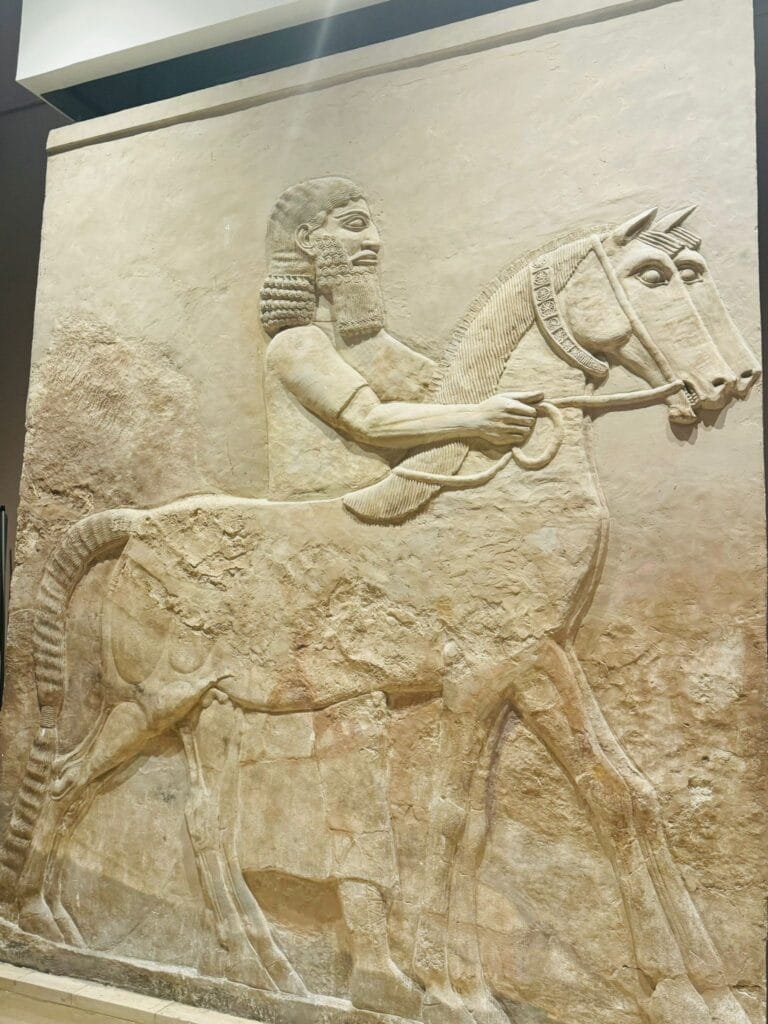
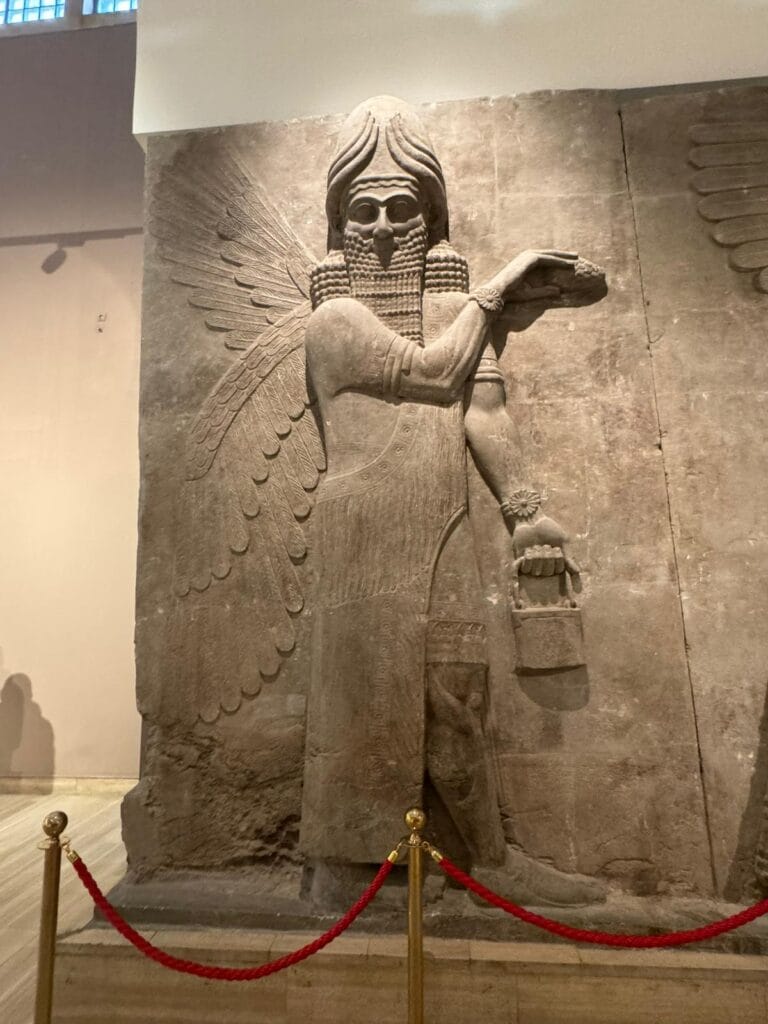
The reliefs from Nineveh and Nimrud are authentic masterpieces of ancient art.
Faced with these monumental reliefs, one understands the magnitude of the Assyrian Empire and the artistic level reached almost three thousand years ago.
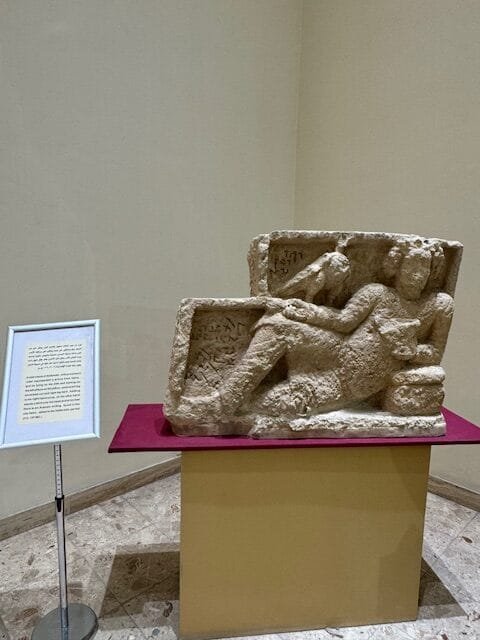
Hatra Hall
Hatra, a desert city declared a World Heritage Site, possesses a completely different aesthetic.
The sculptures in this room display a fascinating cultural mix:
- Mesopotamian influences,
- Greco-Roman,
- and Eastern.
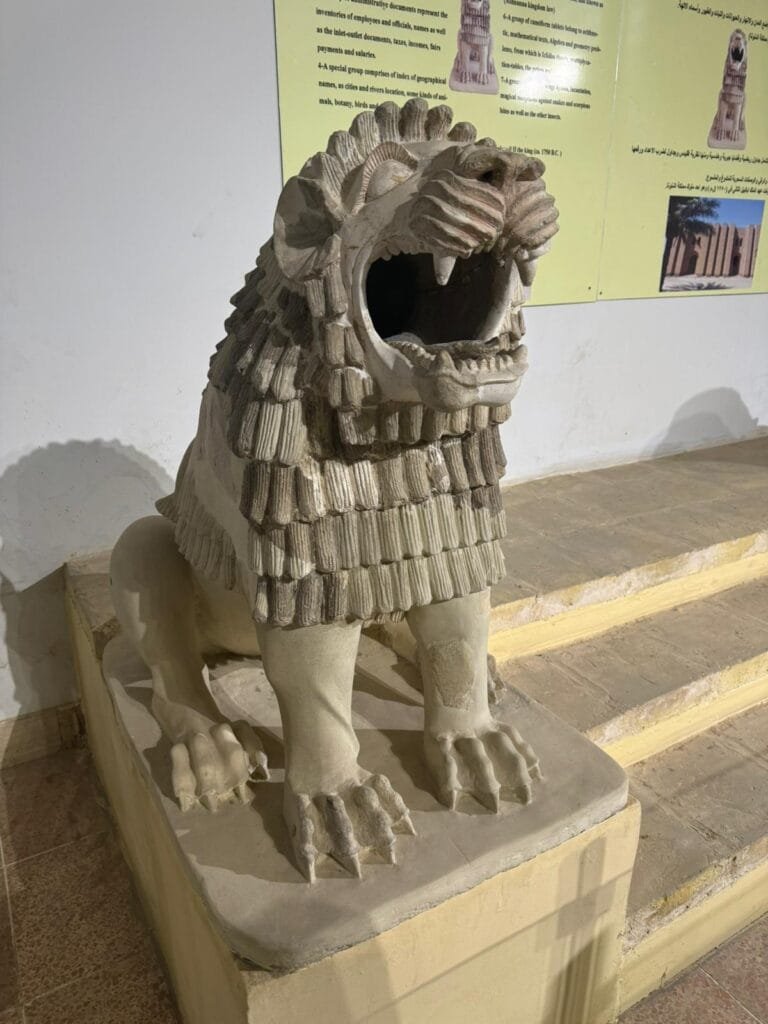
The sculpted faces of nobles and gods have an extraordinary visual power.
Islamic Hall
The museum also dedicates a significant section to Iraq's Islamic period.
Highlights include:
- manuscripts,
- ceramics,
- coins,
- decorative art,
- and architectural elements.
The hall demonstrates how Iraq remained for centuries a great cultural and intellectual centre of the Islamic world.
Prehistoric Hall
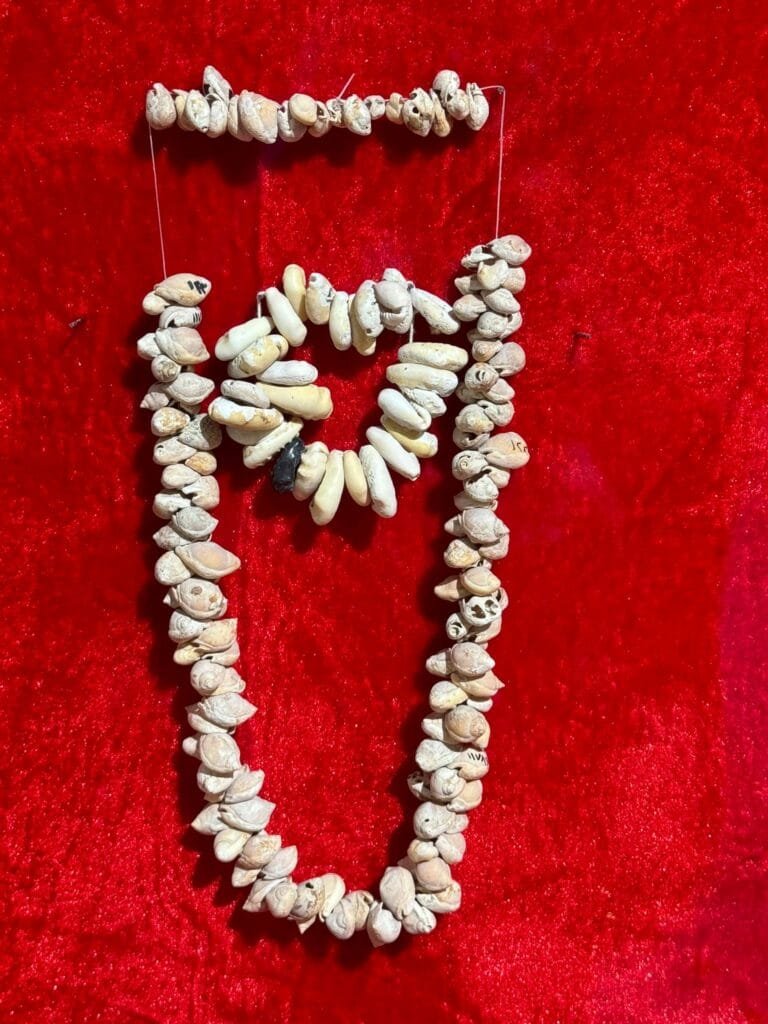
This gallery displays tools, ceramics and objects from communities that predate even the earliest Mesopotamian cities.
It is a fascinating journey into the most remote origins of organised life in this region.
The museum's must-have jewels
Among the most extraordinary pieces that every visitor should seek out are:
- The Royal Treasure of Ur.
- The Assyrian reliefs of Nimrud and Nineveh.
- The original cuneiform tablets.
- Assyrian winged bulls Lamassu.
- The sculptures of Hatra.
- Sumerian gold jewellery.
- Ritual objects of alabaster.
- Mesopotamian cylinder seals.
- The pieces coming from Babylon.
Each of them represents an essential chapter in human history.
The 2003 looting: a tragedy for world heritage
During the 2003 invasion of Iraq, the National Museum suffered one of the greatest archaeological looting incidents in modern history.
Thousands of artefacts disappeared in just a few days. The chaos experienced in Baghdad allowed looters to enter and steal priceless objects.
It is estimated that around 15,000 artefacts were stolen or went missing.
However, thanks to the work of the Iraqi authorities, international archaeologists, Interpol and cultural bodies, a large part of the pieces has been recovered over the years.
To date, approximately 8,000 to 9,000 objects have been recovered, including pieces of enormous historical significance. Even so, many continue to be missing.
The looting of the museum was a tragedy not just for Iraq, but for all of humanity. Because the treasures of Mesopotamia belong to the common heritage of the entire world.
My experience visiting the National Museum of Iraq in 2024
When I crossed its doors in 2024, I felt something hard to describe.
It wasn't just excitement. It was the feeling of being in front of the origin of everything.
I had seen photographs for years, I had read books about Mesopotamia, but nothing truly prepares you for coming face to face with these artefacts. Seeing the original tablets, the gigantic Assyrian reliefs, or the Sumerian jewels has an enormous impact.
I remember constantly thinking:
“I need more time.
The museum is not a place to rush through. Every gallery deserves pausing. It deserves silence. It deserves contemplation.
On many occasions, I completely forgot that I was in a modern museum. I felt like I was directly observing the birth of cities, of writing, and of human memory.
And perhaps that's precisely what's most special about the National Museum of Iraq:
It reminds you that Mesopotamia isn't a lost chapter of history... it's the beginning of all of us.
The museum is currently closed for renovation
Currently, the National Museum of Iraq remains temporarily closed for renovation and modernisation works under the supervision of UNESCO.
These efforts aim to improve the conservation of the collections, update the exhibition spaces, and strengthen the protection of Iraq's archaeological heritage.
Although many travellers feel disappointed at not being able to visit it for now, this renovation represents great news for the future of the museum and for the preservation of Mesopotamian treasures.
Without a doubt, when it reopens, it will once again become one of the most important museums in the world.
Iraq: much more than a destination, the origin of civilisation
Anyone who travels to Iraq discovers more than just a country.
Discover the place where written history began.
Discover biblical cities, legendary empires, and some of the greatest archaeological treasures ever created.
The National Museum of Iraq is the heart of that experience. It is the place where Mesopotamia remains alive.
And when it reopens its doors fully, it will be an unmissable visit for any lover of history, culture, and authentic travel.
Because there are trips that are forgotten. But looking into the eyes of a civilisation over 5,000 years old changes the way you understand the world forever.
If you dream of discovering the true treasures of Mesopotamia, I invite you to experience Iraq with me and tour one of the most fascinating, surprising, and exciting countries on the planet together.
Upcoming trips to Iraq
If you dream of discovering the true treasures of Mesopotamia, I invite you to explore our upcoming departures and tours of Iraq scheduled for this year.
At Viajes a Irak We organise authentic experiences in small groups, exploring unique historical sites such as Baghdad, Babylon, Ur, Mosul or the southern marshes, always accompanied by official local guides and with a deep respect for Iraqi culture.
¿Qué puedes consultar? Available dates, itineraries and upcoming routes from our homepage or contact me directly for personalised travel information.
Before travelling, I also recommend consulting the official recommendations of the Ministry of Foreign Affairs of Spain to get the latest updates on the country.
Would you like to know about other museums in Iraq?
Take a look at our post on: Iraq's ancient treasures: A journey through some of its museums.
I have wanted to go to Iraq for over 25 years and visit the National Museum of Iraq, Ur, Uruk, Babylon, Nineveh, Hatra, Nippur, Eridu, Assur, Ctesiphon, Kish, Mosul or whatever is most feasible, but the political situation first and the war afterwards, along with the looting of the National Museum, have prevented me from fulfilling my wishes. When do you think they will open the National Museum? I would be very grateful if you could keep me informed.
Regards
Thank you so much for your comment! I'm enormously glad to know that you've had the desire to discover Iraq for so many years. It's clear that it's a very special trip for you.
I have sent you an email. I hope you have received it; if not, please also check your spam or junk folder, just in case.
As for the National Museum of Iraq, it still does not have an official reopening date for the general public at the moment. As soon as there are any updates, I will share them both here and with those interested.
Greetings and, once again, thank you for your interest. I hope that very soon you will be able to fulfil that dream of visiting the cradle of civilisation.