Saddam Hussein: personal life and rise to power
Saddam Hussein was born in 1937 in Tikrit, with a childhood marked by poverty, family violence and a strong sense of self-improvement. From a young age he developed an obsession with power and history, looking to the great leaders of the past as role models. His rise within the Ba'ath Party culminated in 1979, when he became president of Iraq and established an authoritarian regime based on absolute control of the state.
Saddam did not rule solely with weapons and political propaganda; he built a own historical account, presenting himself as the heir of the great kings of Mesopotamia ( marshes of Mesopotamia), especially Babylon. This personal vision was directly reflected in the construction of palaces, houses and presidential complexes, conceived as material symbols of power, permanence and historical legitimacy.
For decades, as Iraq went through wars and sanctions, Saddam lived in extreme luxury. His palaces were private residences, seats of political power, security havens and stages designed to impress both the Iraqi people and foreign visitors.
Saddam Hussein's palaces and houses in Iraq
During his rule, Saddam ordered the construction of dozens of palaces and presidential houses throughout Iraq. These buildings were not only residences. They also functioned as symbols of power and prestige.
Many palaces included:
- imported marble
- large ceremonial halls
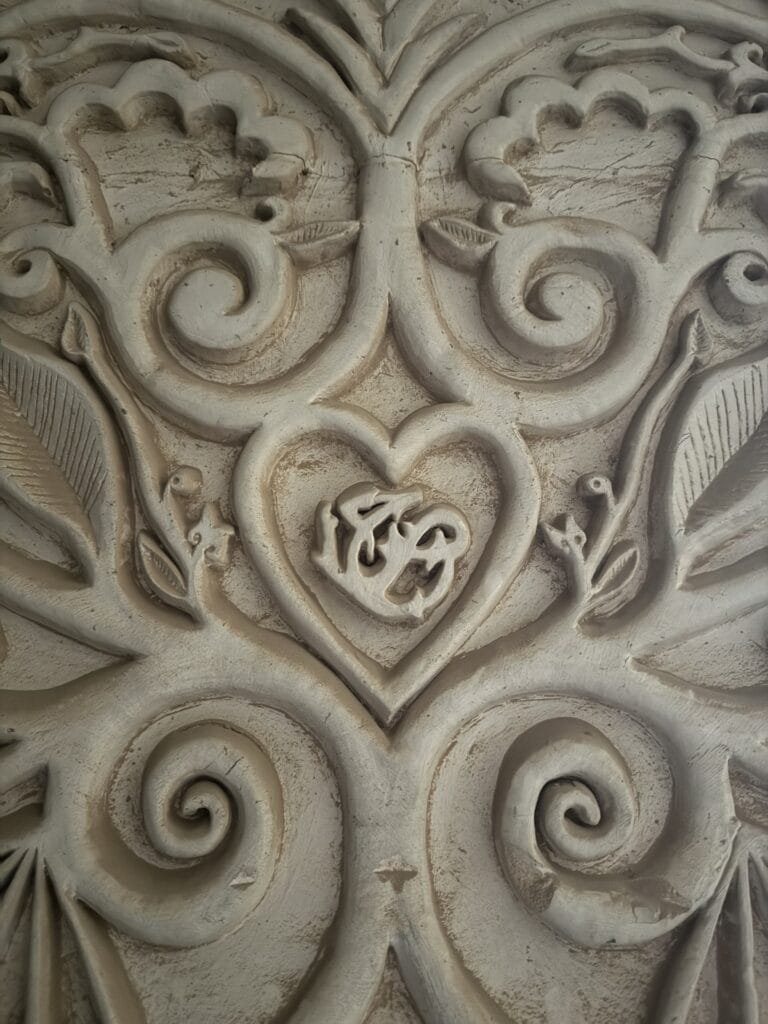
- carved wood works
- extensive gardens and artificial lakes
Some even incorporated historical symbols inspired by Mesopotamia and Babylon. In this way Saddam sought to link himself to the great kings of the past.
Throughout my travels and work in the country, I have had the opportunity to visit some of these palaces in person. A tour through them provides a better understanding of the regime's mentality and Iraq's recent history.
Here are some of the most representative ones.
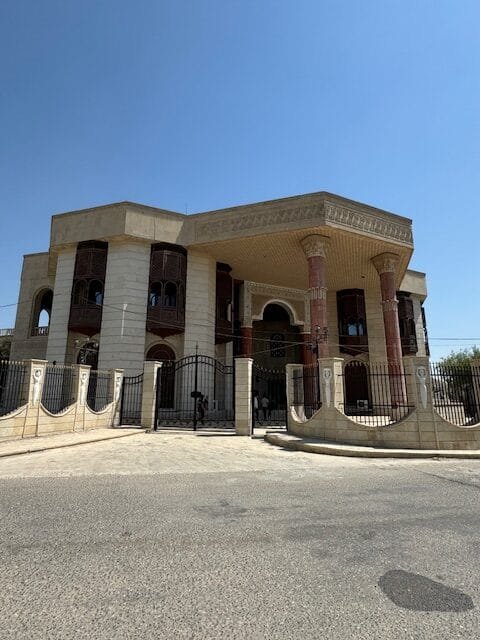
The Peace Palace in Baghdad
A grand palace in the Green Zone
The Peace Palace, known as As-Salam Palace, is located in the Green Zone, Baghdad's political and diplomatic heart. Its strategic location reflects its role as the centre of presidential power.
Saddam ordered its construction during the 1990s. The aim was to create a space for official ceremonies and meetings with foreign delegations.
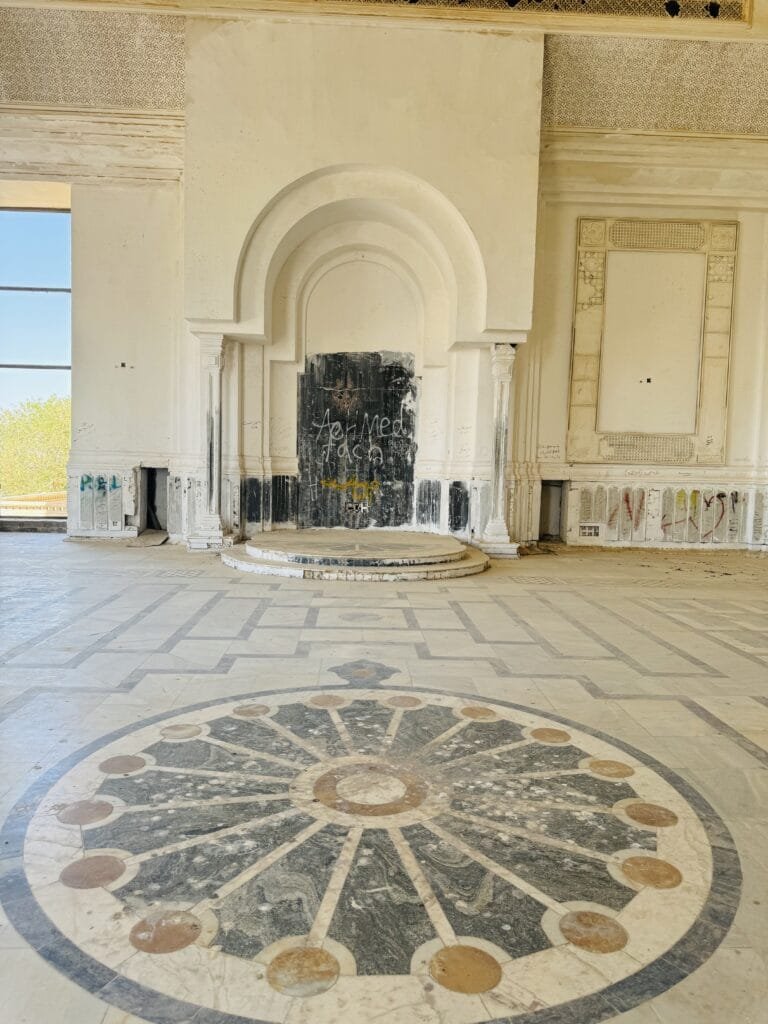
The building stands out for its monumental architecture. It has large halls, high ceilings and long galleries. The architects used marble, decorative columns and carved wooden doors. The design follows a strong symmetry and seeks to convey authority and stability.
Current use of the Peace Palace
After 2003 the palace changed its function. First it was used by international forces. Later it passed to the Iraqi government.
Today it houses state institutions and government offices. Although the building retains its original size and architecture, its political significance is very different.
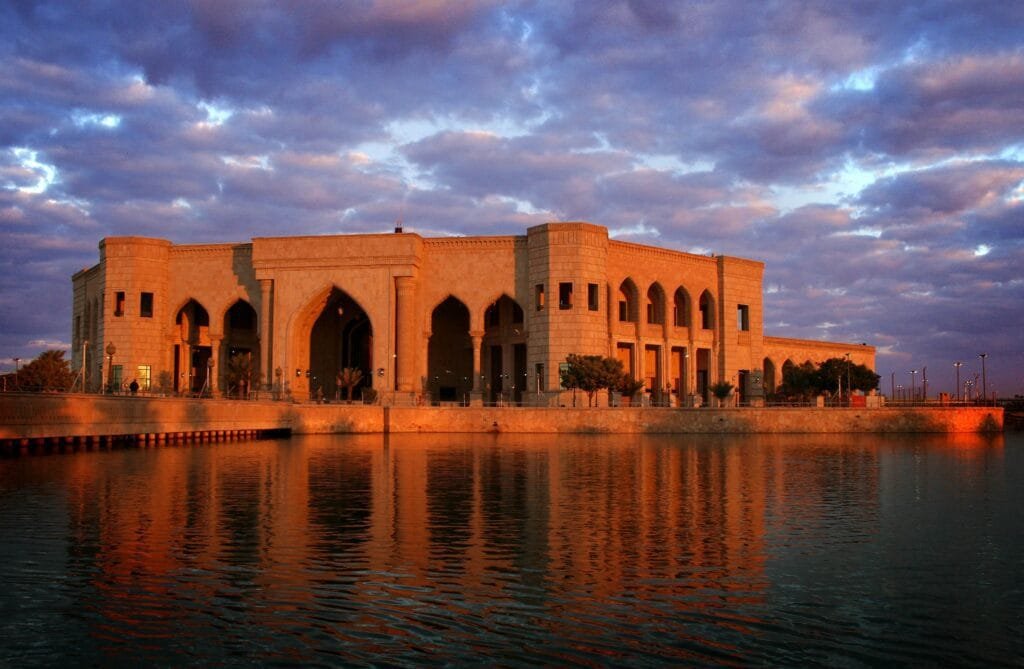
Al-Faw Palace in Baghdad
Origin and architectural design
Al-Faw Palace The palace was built in the late 1990s to commemorate the recovery of the Al-Faw Peninsula after the war with Iran. Surrounded by a large artificial lake and connected by ceremonial bridges, the palace was conceived as a stage for victory and prestige.
Architecturally it stands out for its monumentality: wide staircases, light façades, large halls and open spaces designed for large receptions and official events.
The palace turned university
After the 2003 invasion, international forces used the palace as a military base for several years.
Today, part of the complex is part of the American University of Iraq in Baghdad. The former palace now houses educational and administrative facilities.
This change symbolises a major transformation. A space created for political power is now used for education and academic development.
The Palace of Babylon
A palace built next to ancient Babylon
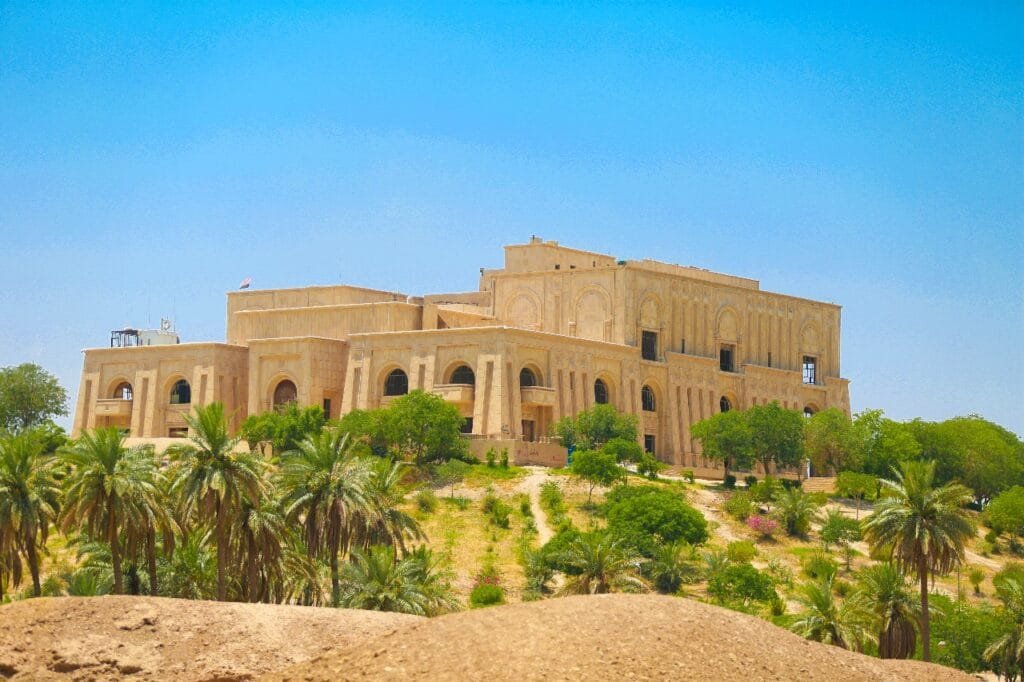
One of the most controversial palaces is the Babylon Palace. Saddam built it on an artificial hill within the archaeological area of the ancient city.
From the building, you can see the ruins of the Babylon, one of the most important centres of Mesopotamian civilisation.
Saddam chose this site with a clear intention. He wanted to link his figure with Mesopotamia's millennia-old history.
Inscriptions and references to Nebuchadnezzar
An inscription in Arabic was placed at the entrance of the palace mentioning Saddam as the restorer of Babylon's glory.
In addition, many bricks in the complex are engraved with his name. This practice is reminiscent of the bricks used by the king Nebuchadnezzar II, one of the great rulers of Babylon.
Debate on heritage and conservation
The construction of the palace was criticised for its impact on the archaeological site. The debate continues today.
Iraqi authorities and international organisations are studying different options for its future. Some proposals include cultural or touristic uses under conservation criteria linked to UNESCO.
The Basra Palace
From presidential residence to museum
The Basra Palace was built in the 1990s as a presidential residence in southern Iraq. Although less ostentatious than other complexes, its architecture is still monumental.
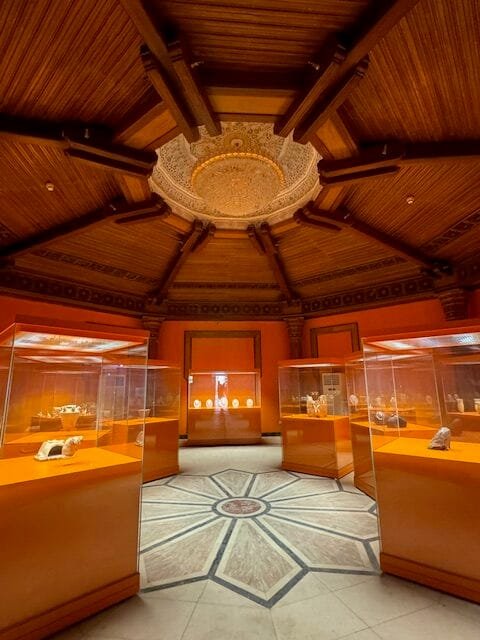
After the fall of the regime, the building was put to a new use. The local authorities transformed it into the Basra Museum.
The Mesopotamian Rooms
Today, the museum houses important pieces from the history of Mesopotamia ( marshes of Mesopotamia) and southern Iraq.
The rooms include:
- ancient sculptures and reliefs
- Mesopotamian cylindrical seals
- ceramics and everyday objects
- pieces from Sumerian, Akkadian, Babylonian and other cultures.
This museum represents a symbolic change. A former presidential palace now protects and disseminates the country's historical heritage.
Saddam Hussein's boats and other luxuries
Saddam also commissioned large presidential yachts. These ships functioned as floating palaces and showcased the luxury of the regime.
Some remain abandoned today. Others are used informally in river areas of the country. There are proposals to convert them into cultural or touristic spaces.
Saddam Hussein's Palaces in Iraq's Recent History
The Saddam Hussein's palaces and houses are part of Iraq's recent history. These buildings reflect a complex period in Iraq's history. They also show how political power used architecture as a symbol of authority.
Many of these palaces are still standing. Some are used as public buildings. Others remain closed or are in the process of restoration.
Travel to Iraq and Mesopotamian Heritage
For many travellers, visiting these sites offers a different perspective on the country. The palaces provide a better understanding of the relationship between modern Iraq and ancient Iraq. Mesopotamia ( marshes of Mesopotamia).
Within the viajesaIrak, These sites complement visits to historic cities such as Babylon, Ur and Baghdad. Alongside the great archaeological sites, they also show a more recent part of the country's history.
Visiting these sites helps to better understand Iraq's past and present.
Join the experience
If you dream of an authentic adventure, guided by local experts and designed to allow you to discover the best of Iraq in safety and depth, this is the time for you.
At Viajesairak we accompany you from the first contact to the last day of the tour. Our commitment is that every traveller returns with a full heart and an awakened mind.
Book your trip to Iraq with us